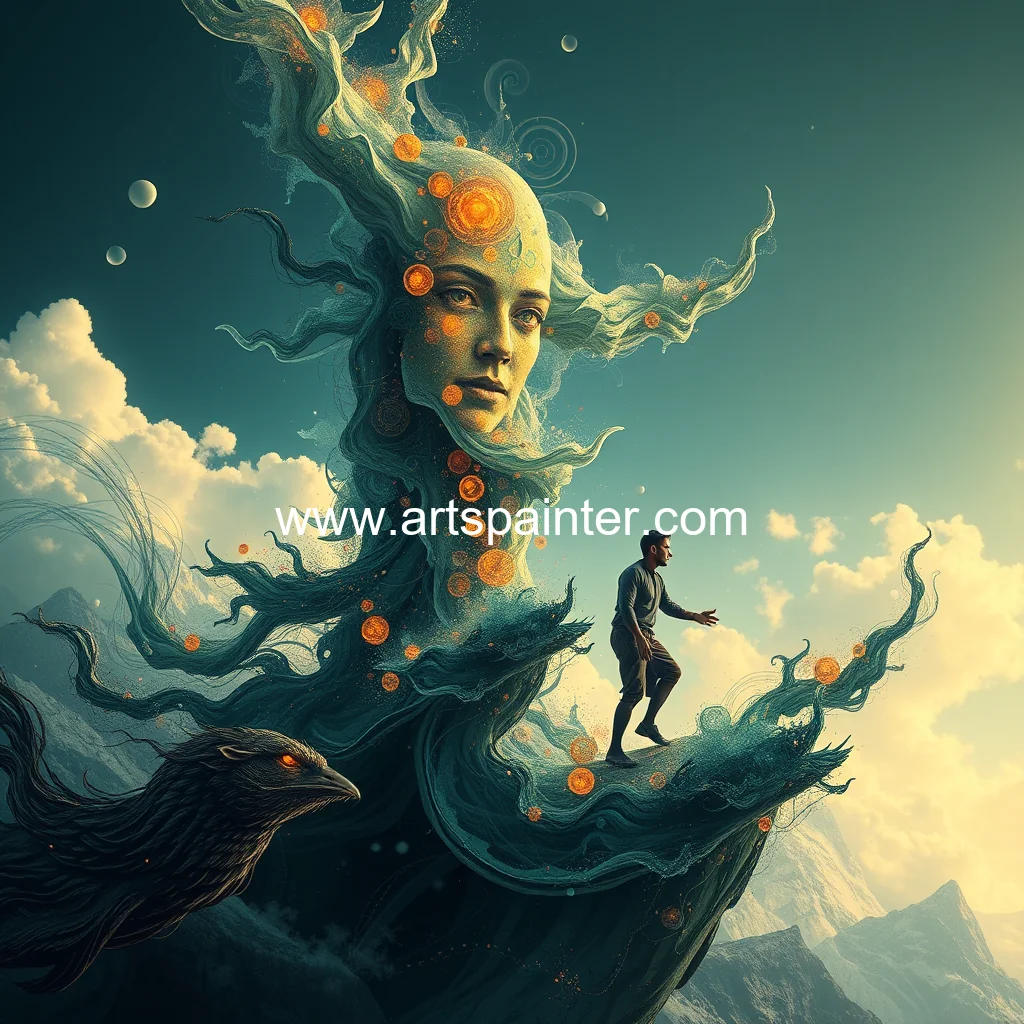
AI-generated art can be used for various purposes, including advertising, entertainment, and even education.
Table of Contents
The Rise of AI Art
The emergence of AI art has been a rapid and exciting development in the art world. With the advancement of machine learning algorithms and deep learning techniques, AI systems can now generate stunning visuals that rival those created by human artists. Key features of AI art include:
- Lack of intent: AI art is often created without the intention of the artist, which can result in a lack of emotional weight and personal connection. Visual appeal: AI-generated art can be visually stunning, with intricate details and realistic textures. * Scalability: AI art can be generated quickly and efficiently, making it ideal for large-scale productions. ## Applications of AI Art**
- Data Collection: A large dataset of images, videos, or text is collected and used to train the AI model. Model Training: The AI model is trained on the collected data, allowing it to learn patterns and relationships between different elements. Prompting: A user provides a prompt or input to the AI model, which is used to generate the final artwork. * Generation: The AI model uses the learned patterns and relationships to generate the final artwork. ### The Science Behind AI Art**
- Neural Networks: AI models use neural networks to learn patterns and relationships between different elements. Generative Adversarial Networks (GANs): GANs are used to generate new, original content that is often indistinguishable from human-created art. Natural Language Processing (NLP): NLP is used to analyze and understand the user’s prompt or input.
The artist’s intent was to create a piece that would evoke a sense of nostalgia and wonder, and MidJjourney delivered.
You Might Also Enjoy: Art Pieces for BeginnersThe Role of Intent in Art Creation
Intent is the driving force behind why a human artist creates. It is the underlying motivation that guides the creative process, shaping the final product and giving it meaning. In the case of Jason Allen’s artwork, his intent was to evoke a sense of nostalgia and wonder. He used MidJourney to create an image that would transport viewers to a different time and place, one that was both familiar and yet, utterly unique.
Understanding the Creative Process
The creative process is a complex and multifaceted one. It involves a combination of inspiration, imagination, and technical skill. When an artist sets out to create a piece, they must first generate an idea, which can come from a variety of sources, including personal experiences, observations, and research. This idea is then refined and developed through a series of sketches, drafts, and iterations. The artist’s intent is the driving force behind the creative process, guiding the development of the idea and shaping the final product. The creative process involves a combination of inspiration, imagination, and technical skill. The artist’s intent can be influenced by a variety of factors, including personal experiences, observations, and research.
The Power of MidJourney
MidJourney is a cutting-edge AI tool that uses patterns and data to generate images.
The Purpose of AI Art
AI art is a rapidly evolving field that has sparked intense debate about the role of technology in the creative process. While some see AI-generated art as a revolutionary tool for artists, others view it as a threat to traditional art forms. But what is the purpose of AI art, and how does it differ from human-created art?
Understanding the Intent Behind AI Art
When an artist creates with intent, they’re communicating something about themselves, their world, or their message. This intent can be explicit or implicit, but it’s always present. AI art, on the other hand, lacks this intent. It’s a product of algorithms and data, rather than a deliberate expression of the artist’s vision. Lack of Emotional Resonance: AI art often lacks the emotional resonance that comes from human experience. While AI can generate realistic images and videos, it can’t replicate the emotional depth and complexity that comes from a human’s perspective. Limited Contextual Understanding: AI art often struggles to understand the context and nuances of human communication.
AI-generated art is a new frontier in the world of art, but it raises important questions about authorship, ownership, and the role of the artist.
The Rise of AI-Generated Art
In recent years, artificial intelligence has made tremendous strides in the field of art. Generative adversarial networks (GANs) and other machine learning algorithms have enabled the creation of stunning works of art that are increasingly indistinguishable from those created by humans. However, the question remains: can AI-generated art truly be considered art?
The Challenges of AI-Generated Art
There are several challenges associated with AI-generated art. One of the main concerns is the issue of authorship. Who should be credited as the creator of an AI-generated work of art?
news is a contributor at Arts Painter. We are committed to providing well-researched, accurate, and valuable content to our readers.
You May Also Like
About the Author
Applications of AI Art
AI art has a wide range of applications across various industries, including: AI art has already been used to create stunning movie posters that have garnered significant attention.
But what exactly is AI art, and how does it work?
The Basics of AI Art
AI art, short for artificial intelligence-generated art, is a type of digital art created using algorithms and machine learning models. These models are trained on vast amounts of data, including images, videos, and text, to learn patterns and relationships between different elements. This training enables the models to generate new, original content that is often indistinguishable from human-created art.
How AI Art is Created
The process of creating AI art involves several steps:
The Science Behind AI Art
AI art relies on several key technologies, including: