Table of Contents
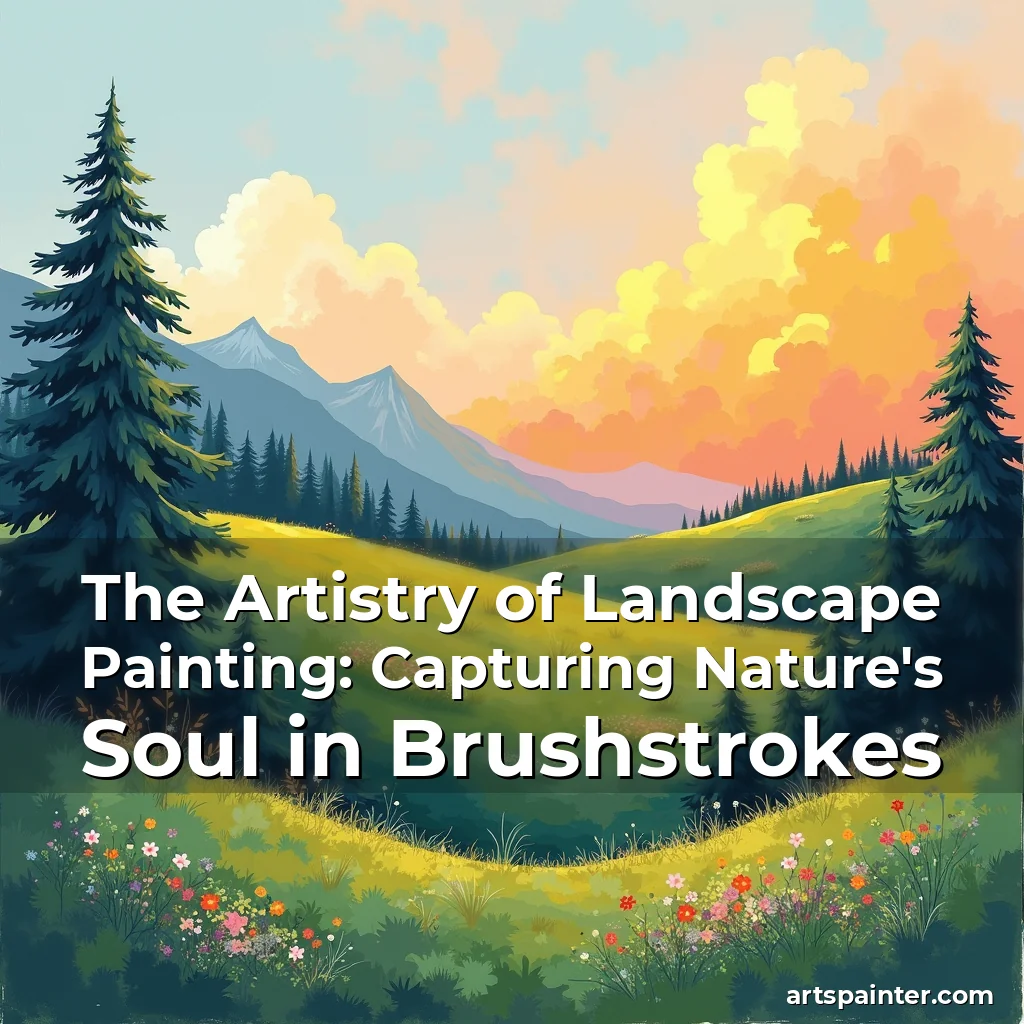
The Artistry of Landscape Painting: Capturing Nature’s Soul in Brushstrokes
Landscape painting is an enduring testament to humanity’s deep connection with nature, transforming vast vistas and subtle natural elements into visual poetry. This form of artistic expression allows painters to explore their surroundings through color, texture, and composition while conveying emotional resonance that transcends time.
From the dramatic cliffs of the Hudson River School to the serene meadows captured by contemporary impressionists, landscape painting continues to evolve as both a technical discipline and a deeply personal journey. It invites artists to engage with the world around them using brushes rather than cameras, capturing fleeting moments with deliberate intention.
The Evolution of Landscape Painting Through History
Artistic depictions of landscapes date back thousands of years, appearing in ancient cave paintings where early humans recorded their environments with rudimentary tools. These primitive works laid the foundation for future generations who would refine techniques over centuries.
In medieval Europe, religious iconography dominated visual arts, often depicting biblical scenes within stylized settings. However, during the Renaissance period, artists began incorporating realistic natural backgrounds into their compositions, marking a significant shift towards observational accuracy.
The 16th century saw the emergence of dedicated landscape painters such as Albrecht Dürer, whose meticulous studies of flora and fauna demonstrated growing interest in natural forms. His work influenced later artists seeking to capture atmospheric effects and spatial depth.
Dutch Golden Age painters revolutionized landscape art by emphasizing everyday scenery, creating intimate portrayals of fields, rivers, and seascapes. Their attention to light and weather conditions set new standards for realism and compositional balance.
- Baroque Period: Artists like Claude Lorrain introduced grandeur and drama into landscapes, using bold contrasts between light and shadow to evoke emotion.
- Romanticism: The 18th and 19th centuries witnessed a surge in expressive landscapes focusing on sublime beauty and human emotion, exemplified by Caspar David Friedrich’s haunting mountainous views.
Mastery of Color Theory in Landscaping Composition
Understanding how colors interact is fundamental to successful landscape painting. Artists must consider warm versus cool tones, complementary hues, and value ranges when constructing their compositions.
A well-balanced palette enhances the sense of space and atmosphere in any scene. For instance, using analogous colors can create harmony, while contrasting shades add vibrancy and dimensionality.
Creative application of color temperature significantly affects mood perception. Warm reds and oranges convey energy and warmth, whereas blues and greens suggest tranquility and freshness.
Value contrast plays a crucial role in defining depth and volume within a landscape. High-key areas should be balanced against darker regions to maintain visual equilibrium without overwhelming the viewer.
Techniques for Rendering Natural Elements
Accurate representation of trees requires careful observation of bark textures, leaf structures, and seasonal variations. Artists often study botanical references to ensure anatomical correctness in their tree illustrations.
Water surfaces present unique challenges due to their reflective qualities and ever-changing movement patterns. Techniques such as impasto and glazing help depict ripples, reflections, and atmospheric perspective effectively.
Sky rendering demands sensitivity to light sources and cloud formations. Understanding horizon lines, gradients, and optical illusions enables painters to create convincing skies that enhance overall composition.
Mountains contribute majesty to landscapes but require precise foreshortening techniques to avoid distortion. Layering translucent washes mimics atmospheric clarity at different altitudes.
Special Considerations for Foreground Details
Fine detailing in foreground elements like rocks, flowers, and grass adds narrative richness to landscapes. These components provide context and guide the viewer’s eye through the artwork.
Studies show that viewers spend approximately 3 seconds longer examining detailed foregrounds compared to abstract backgrounds. This suggests that intricate foreground work increases engagement levels significantly.
Paying close attention to small-scale features creates a sense of place and authenticity. Even minor imperfections in foliage or soil texture can make a piece feel more alive and immersive.
Compositional Principles in Landscape Design
Effective composition guides the viewer’s gaze across the canvas, establishing focal points and balancing negative spaces. Classic rules like the rule of thirds serve as useful starting points for beginners.
Varying line weights helps define depth relationships between objects. Thicker outlines emphasize proximity, while thinner lines indicate distance, enhancing spatial awareness.
Leading lines direct attention toward key elements within the composition. Rivers, roads, or rows of trees naturally draw eyes deeper into the picture plane, creating dynamic tension.
Strategic placement of figures or buildings introduces scale reference and human presence, anchoring otherwise expansive scenes with familiar dimensions.
The Role of Light in Shaping Emotional Tone
Natural lighting conditions profoundly influence the mood conveyed through landscape paintings. Morning sun casts long shadows, suggesting renewal and hope, while dusk evokes mystery and introspection.
Golden hour offers ideal lighting for dramatic effect, with elongated shadows and intensified colors creating a magical ambiance. Painters often plan sessions around these optimal times for enhanced visual impact.
Overcast days produce soft, diffused illumination perfect for muted, contemplative pieces. Reduced contrast values allow for greater emphasis on texture and surface quality.
Noon sunlight provides sharp highlights and strong shadows, ideal for showcasing architectural details or geological formations with high contrast intensity.
Modern Innovations in Digital Landscape Painting
Digital technology has expanded creative possibilities for landscape artists, offering unprecedented control over color blending, layer management, and brush simulation options. Software platforms now rival traditional mediums in versatility.
Tablet-based drawing allows for pressure-sensitive input that replicates physical brush behavior accurately. Customizable brush engines enable experimentation with unique textural effects previously difficult to achieve manually.
Photorealistic digital renders can be manipulated extensively before finalizing compositions, allowing artists to test various color schemes and lighting scenarios efficiently without wasting materials.
Online communities facilitate collaborative projects where artists share resources, critique each other’s work, and participate in virtual exhibitions reaching global audiences instantly.
Educational Resources for Aspiring Landscape Painters
Better understanding of landscape painting fundamentals comes from structured learning experiences including workshops, online tutorials, and mentorship programs tailored specifically for emerging artists.
Academic institutions offer specialized courses covering historical perspectives alongside modern approaches, ensuring students develop both technical proficiency and conceptual awareness.
Private instructors provide personalized feedback based on individual progress tracking, helping students identify strengths and areas needing improvement through constructive criticism.
Art supply retailers frequently host live demonstrations showcasing professional techniques applicable to landscape painting, giving attendees hands-on experience with premium materials.
Conclusion
Landscape painting remains a vital component of artistic practice, continually evolving with changing cultural contexts and technological advancements. Its ability to connect people with nature ensures its relevance across generations.
Whether working traditionally or digitally, embracing the principles discussed here will empower artists to create compelling landscapes that resonate emotionally while demonstrating mastery of technique.

news is a contributor at Arts Painter. We are committed to providing well-researched, accurate, and valuable content to our readers.