Table of Contents
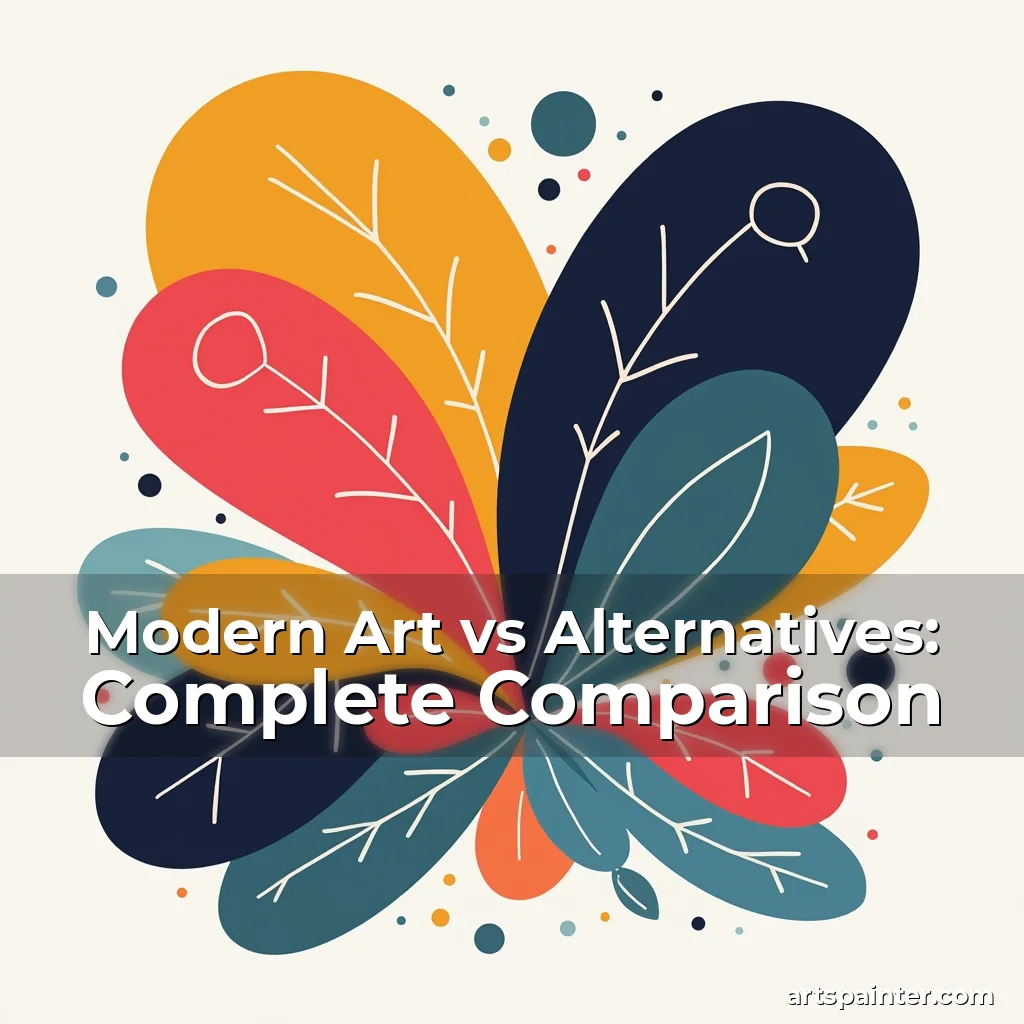
Modern Art vs Alternatives: Complete Comparison
In an era where artistic expression is constantly evolving, understanding modern art in contrast to other styles becomes crucial. This exploration delves into how modern art differs from classical traditions, abstract movements, contemporary practices, digital innovations, and even traditional crafts. Artists today navigate a complex landscape shaped by historical influences and cutting-edge techniques.
The distinctions between these forms highlight not only stylistic preferences but also philosophical underpinnings that define each approach. By examining their characteristics, we uncover what makes modern art uniquely positioned within the broader spectrum of visual creativity.
The Evolutionary Roots of Modern Art
Modern art emerged as a response to rapid societal changes in the late 19th and early 20th centuries. Industrialization, technological advancements, and shifting cultural values prompted artists to question established norms and explore new ways of representing reality.
This period saw the rise of movements such as Impressionism, Cubism, Surrealism, and Abstract Expressionism. These movements broke away from conventional techniques, embracing experimentation and challenging viewers’ perceptions of form, color, and meaning.
Impressionism, for example, focused on capturing fleeting moments through loose brushwork and vibrant colors. It marked a departure from academic painting’s emphasis on precise detail and idealized subjects.
Cubism, pioneered by Pablo Picasso and Georges Braque, deconstructed objects into geometric shapes, reflecting a fragmented view of reality influenced by scientific discoveries and urban life.
- Surrealism explored dream logic and subconscious imagery, often using unexpected juxtapositions to evoke emotion and provoke thought.
- Abstract Expressionism emphasized spontaneous, automatic creation, prioritizing emotional intensity over representational accuracy.
These foundational movements laid the groundwork for subsequent generations of artists who continued pushing boundaries in both technique and concept.
Diverging Paths: Classical vs. Modern Art
Classical art adheres to principles rooted in symmetry, proportion, and perspective derived from ancient Greek and Roman ideals. In contrast, modern art embraces ambiguity, fragmentation, and conceptual depth over strict formal rules.
While classical painters meticulously rendered scenes with lifelike precision, modernists sought alternative modes of representation that reflected inner experiences rather than external appearances.
One key difference lies in subject matter. Traditional works often depicted mythological themes, religious narratives, or portraits of notable figures. Modern pieces frequently address social issues, psychological states, or pure abstraction without narrative context.
For instance, Renaissance masterpieces like Leonardo da Vinci’s Mona Lisa embody harmonious balance and ideal beauty. Meanwhile, Jackson Pollock’s drip paintings convey raw energy and existential uncertainty through chaotic layering of paint.
This divergence reflects changing attitudes toward human experience and the role of the artist in society—whether as a skilled craftsman or a visionary thinker.
Modern Art in Contrast to Abstract Movements
Although many modern artworks are abstract, they differ significantly from purely non-representational forms developed later. The transition from figurative to abstract expression was gradual and marked by distinct phases.
Movements like Fauvism and Expressionism bridged this gap by intensifying color use while still maintaining recognizable forms. They emphasized subjective interpretation over objective depiction.
Fauvist painters such as Henri Matisse used bold, unnatural hues to evoke emotions rather than replicate nature accurately. Their work foreshadowed full abstraction by prioritizing feeling over realism.
Expressionists like Ernst Ludwig Kirchner distorted anatomy and employed vivid contrasts to express anxiety and alienation in industrial cities. Their style paved the way for more radical departures from tradition.
Eventually, artists moved towards complete abstraction, exemplified by Wassily Kandinsky’s spiritual geometries and Piet Mondrian’s grid-based compositions. These works abandoned any reference to tangible reality altogether.
Such evolution underscores how modern art continually redefined itself through successive waves of innovation and self-reflection.
Contemporary Practices Versus Historical Modernism
Today’s contemporary art scene includes diverse approaches that extend beyond what was considered “modern” during its original emergence. New media technologies, performance art, installation pieces, and conceptual frameworks have expanded definitions further.
Whereas earlier modern artists primarily worked with canvas and sculpture, current practitioners incorporate video, soundscapes, interactive elements, and virtual environments into their practice.
Performance art, for instance, transforms the viewer into active participant rather than passive observer. Marina Abramović’s endurance performances challenge physical limits and test relationships between performer and audience.
Installation art creates immersive spaces that envelop spectators entirely. Olafur Eliasson’s weather installations manipulate light, water, and air currents to produce sensory illusions.
Conceptual art places ideas above aesthetics, emphasizing intellectual engagement over technical skill. Marcel Duchamp’s readymades questioned authorship and value inherent in artistic production.
This shift demonstrates how modern art has evolved continuously since its inception, adapting to new contexts while retaining core questioning impulses at its heart.
Digital Innovations Redefining Visual Language
The integration of technology has dramatically transformed how artists create and present their work today. Digital tools offer unprecedented possibilities for manipulating images, textures, and spatial dimensions.
Software programs allow artists to generate intricate patterns, simulate natural phenomena, or alter perspectives dynamically. Adobe Photoshop enables seamless blending of photographs with surreal elements never before possible manually.
Virtual reality (VR) provides fully immersive environments where users can interact with three-dimensional artworks in real-time. Programs like Tilt Brush let creators design floating sculptures in mid-air, defying gravity limitations.
Augmented reality (AR) overlays digital enhancements onto physical spaces, creating hybrid realities that change based on user interaction. Apps like Google Arts & Culture bring museum collections into homes via smartphones.
Moreover, AI-generated art challenges traditional notions of authorship and intentionality. Algorithms trained on vast datasets produce novel combinations of styles and motifs autonomously.
As these developments unfold, debates arise regarding authenticity, ownership rights, and whether machine-produced outputs qualify as true expressions of individual vision.
Bridging Traditions: Blending Old Techniques With New Ideas
A growing number of artists now combine traditional craftsmanship with contemporary methods to create innovative hybrids. This synthesis honors past legacies while embracing future potentialities.
Acrylic pouring techniques mimic the fluidity seen in Baroque paintings yet employ modern materials that dry quickly and resist cracking over time. Artists mix pigments with gel mediums to achieve translucent effects reminiscent of Venetian glasswork.
Printmaking processes have been revolutionized by laser engraving and computer-controlled etching machines which enable highly detailed reproductions previously unattainable through hand-carved plates alone.
Textile arts intersect with digital fabrication when designers use CAD software to plan complex weaving patterns before executing them on automated looms capable of producing custom designs efficiently.
By integrating old-world skills with high-tech solutions, these cross-pollinations foster fresh dialogues across eras and disciplines within the ever-expanding realm of artistic possibility.
Evaluating Impact: How Does Modern Art Influence Society?
Modern art plays significant roles beyond aesthetic appreciation—it engages deeply with political discourse, identity formation, and collective memory shaping public consciousness worldwide.
Artists often serve as commentators on pressing global concerns ranging from climate change awareness campaigns to critiques against systemic oppression structures embedded historically in societies around us.
Political activism finds powerful expression through street murals depicting protests against injustice or installations highlighting refugee crises globally affecting millions daily.
Cultural preservation efforts utilize multimedia platforms alongside indigenous storytelling traditions ensuring ancestral knowledge isn’t lost amidst globalization trends threatening local identities.
Educational initiatives leverage interactive exhibits designed specifically for children aiming to instill curiosity about science topics through playful engagements involving motion sensors activating animated projections responding instantly to movement inputs.
Through such multifaceted contributions spanning advocacy, education, and community building endeavors, modern art remains vital force influencing ongoing transformations taking place across cultures everywhere simultaneously.
Conclusion
Understanding modern art requires recognizing its dynamic relationship with various alternatives—from classical foundations to digital frontiers. Each comparison reveals unique strengths and limitations inherent within different paradigms guiding creative output throughout history up until present day.
As artists continue exploring intersections among seemingly disparate fields, they contribute actively toward shaping tomorrow’s visual language while honoring rich heritage informing today’s expressive choices available universally accessible now more than ever before anywhere anytime.

news is a contributor at Arts Painter. We are committed to providing well-researched, accurate, and valuable content to our readers.