Table of Contents
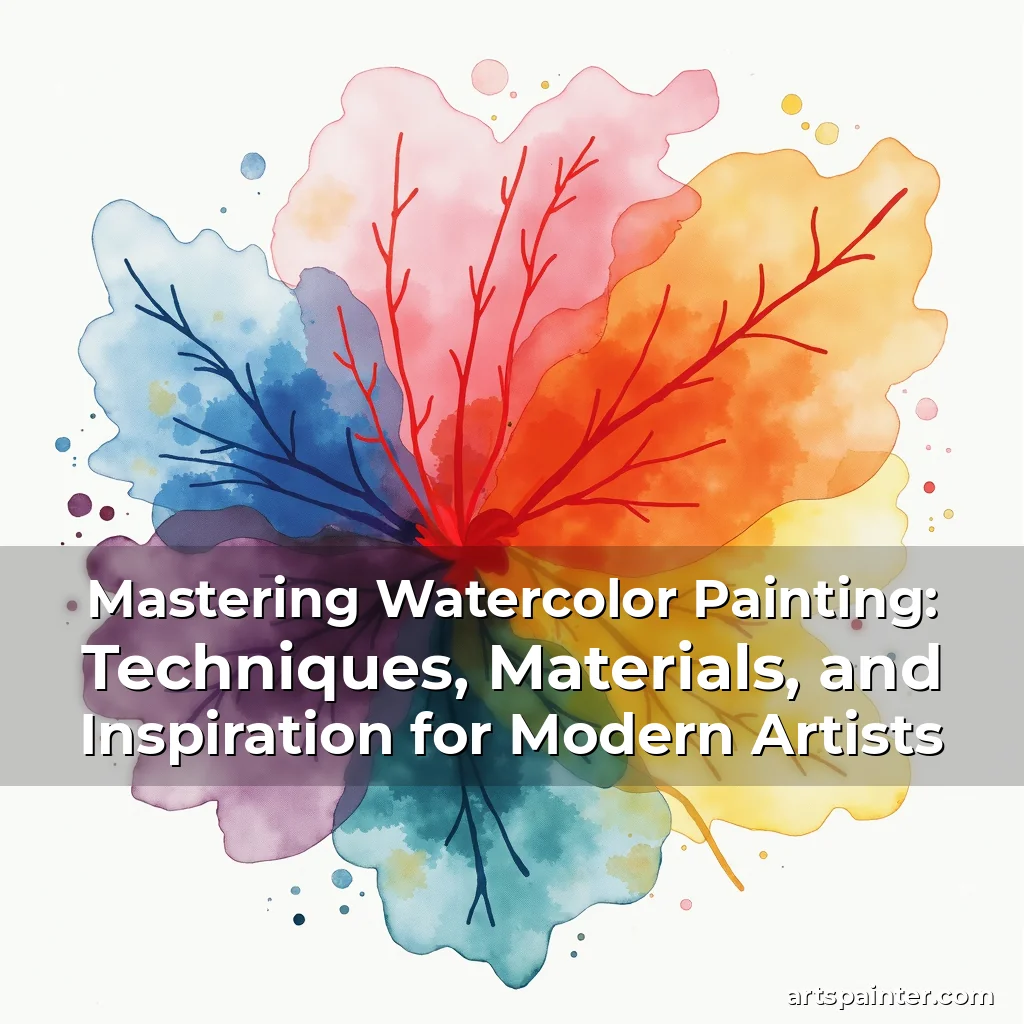
Mastering Watercolor Painting: Techniques, Materials, and Inspiration for Modern Artists
Watercolor painting offers a unique blend of spontaneity and precision that continues to captivate artists worldwide. This medium allows for incredible depth and luminosity while demanding mastery over control and intuition.
From delicate botanical illustrations to bold abstract expressions, watercolor adapts seamlessly to various styles and subjects. Understanding its nuances unlocks endless creative possibilities.
The Fundamentals of Watercolor Painting
A strong foundation begins with selecting appropriate materials. Quality tools significantly impact your ability to achieve desired effects and maintain consistency in your work.
Watercolor paints come in two primary forms: tubes and pans. Tube paints offer richer pigments and easier blending, while pans provide convenience for travel and sketching sessions.
Selecting the right brushes is equally crucial. Round brushes excel for detailed work and washes, whereas flat brushes handle broad strokes and background coverage effectively.
Paper choice affects everything from pigment absorption to longevity. Cold press paper balances tooth and smoothness, making it ideal for most techniques.
- Tubed Paint: Provides full saturation and vibrant colors suitable for professional-grade results.
- Pan Paint: Offers portability and ease-of-use, though may require reactivating dried pigments before use.
- Fine-Tip Brushes: Perfect for intricate detailing and controlled line work in small-scale compositions.
- Brush Sizes: A range from #0 to #6 is typically sufficient for most watercolor projects.
Mastery Through Technique Development
Developing technical proficiency requires practice across fundamental methods. Wet-on-wet techniques allow colors to bleed naturally while dry brushing creates textured surfaces.
Layering techniques enable building up intensity gradually by applying successive transparent glazes. This approach prevents muddying colors when working with opaque substances.
Understanding how water interacts with paint is essential. Too much moisture dilutes hues excessively, while insufficient hydration limits pigment dispersion potential.
Practice controlling water-to-paint ratios consistently. Experiment with varying amounts on separate test sheets until achieving consistent results.
Wet-on-Wet Application
This technique involves applying diluted paint onto damp paper. Colors blend organically rather than being applied separately, creating soft transitions and atmospheric effects.
Beginners often struggle with maintaining even surface tension during application. Using a spray bottle instead of direct water pouring helps distribute moisture uniformly.
For best results, pre-moisten paper evenly before beginning. Allow it to reach optimal dampness level before adding initial washes.
Experiment with timing – faster evaporation rates occur in warmer environments, requiring quicker execution of complex blends.
Color Theory in Watercolor Practice
Effective color management enhances visual impact dramatically. Understanding complementary relationships improves composition balance and emotional resonance.
Transparency plays a vital role in watercolor due to its inherent translucency characteristics. Opaque colors should be reserved for specific applications rather than general use.
Temperature considerations influence perceived space within paintings. Cool tones recede visually while warm hues advance toward viewer, affecting spatial dynamics.
Careful selection of color palettes ensures cohesive narratives emerge naturally from individual works rather than appearing forced or artificial.
Mixing Strategies for Vibrant Results
Combining limited color sets strategically produces surprising vibrancy without overwhelming viewers. Focusing on dominant hues strengthens overall harmony.
Additives such as salt crystals or alcohol can alter surface textures unpredictably, generating interesting patterns worthy of incorporation into intentional designs.
Drying times vary depending upon environmental conditions. Tracking progress carefully avoids premature interference with still-developing layers.
Keeping swatches organized aids future reference regarding exact mixtures achieved previously under similar circumstances.
Advanced Methods and Specialized Approaches
Specialty techniques expand creative boundaries beyond basic approaches. Salt granulation adds organic texture while resist methods preserve untouched areas.
Masking fluids protect white spaces temporarily during multi-layer processes, allowing precise placement of light elements against darker backgrounds.
Gesso primers modify absorbency properties of substrates, enabling unique interactions between media components not achievable otherwise.
Collage integration introduces dimensional complexity through layered construction techniques incorporating mixed-media elements.
Salt Texture Creation
Flaking salt onto fresh washes
Varying salt quantities controls pattern density – lighter applications produce sparse arrangements versus heavier distributions yielding denser clusters.
Test different salts available commercially; some dissolve faster than others affecting final appearance duration post-drying phase.
Combine with other texturing agents like gel medium or sand for compounded surface interest in composite artworks.
Common Challenges and Troubleshooting Solutions
Bleeding edges frequently occur when working too slowly after initial wash application. Establishing strict workflow timelines minimizes unwanted diffusion risks.
Overworking areas leads to dull, muddy outcomes. Limit revisiting completed sections unless absolutely necessary for correction purposes.
Inconsistent opacity levels arise from improper preparation stages. Pre-testing all new supplies beforehand establishes baseline expectations.
Fixative sprays stabilize finished pieces but shouldn’t replace thorough drying procedures required prior to handling sensitive surfaces.
Inspiration Sources and Creative Exploration
Nature remains perennially rich source material offering infinite variation opportunities through seasonal changes alone.
Photographic references provide structured frameworks yet encourage personal interpretation rather than literal reproduction attempts.
Studying masterworks exposes underlying principles guiding successful compositions across historical periods and geographic regions alike.
Documenting daily observations cultivates awareness enhancing observational skills essential for accurate representation efforts.
Curatorial Practices for Artistic Growth
Organize collected references thematically rather than randomly. Groupings by subject matter facilitate comparative analysis beneficial for skill development.
Create mood boards combining visual stimuli representing preferred aesthetics, helping identify recurring themes warranting deeper investigation.
Track evolving preferences chronologically to recognize stylistic shifts occurring naturally throughout career progression phases.
Participate actively in critique circles exchanging constructive feedback fostering objective perspectives about one’s own work output regularly.
Preservation and Presentation Considerations
Proper framing protects artwork integrity preventing damage from environmental factors impacting long-term stability of painted surfaces.
Use archival-quality matting materials ensuring compatibility with water-based media to prevent chemical reactions degrading original condition over time.
Apply UV-filtering glass to minimize fading caused by prolonged exposure to natural light sources commonly found in display settings.
Handle framed pieces carefully during transportation keeping protective covers intact until ready for exhibition installation activities.
Conclusion
Watercolor painting demands both technical knowledge and creative intuition. Mastering its intricacies opens doors to expressive freedom rarely matched by other mediums.
Continuous learning through experimentation and observation keeps artistic growth dynamic. Embrace challenges as opportunities rather than obstacles limiting potential achievements.

news is a contributor at Arts Painter. We are committed to providing well-researched, accurate, and valuable content to our readers.